
GRIDLOCK – We all have faced gridlock in our marriage at some point in time. Dave and I are both stubborn people and rebellious. He is a silent rebellion and I am an open rebellion. Put all that together and we have gridlock often. My whole blog could be one story after another of us locking horns. I look back now and many of them are just ridiculous and we laugh at many of them. Some have caused pain. Nonetheless, here we are 41+ years later still locking horns.
According to Gottman here are the signs that you have gridlock:
1. You’ve had the same argument again and again with no resolution.
2. Neither of you can address the issue with humor, empathy, or affection.
3. The issue is becoming increasingly polarizing as time goes on.
4. Compromise seems impossible because it would mean selling out---giving up something important and core to your beliefs, values, or sense of self.
HOW do we avoid gridlock?
We are less likely to get into gridlock if we adopt these principles in our marriage:
1. Enhance your love map.
2. Nurture your fondness and admiration.
3. Turn toward each other instead of away.
4. Let your partner influence you.
5. Look for small moments where you ‘miss’ each other’s needs and fill them.
I have written about each of those in my past blogs. Look them up for more information.
I AM IN GRIDLOCK NOW – what do I do?
“To navigate your way out of gridlock, you have to first understand that no matter how seemingly insignificant the issue, gridlock is a sign that you each have dreams for your life that the other isn’t aware of, hasn’t acknowledged, or doesn’t respect. By dreams I mean the hopes, aspirations, and wishes that are part of your identity and give purpose and meaning to your life.” Gottman from his book The Seven Principles for Making Marriage Work.
Happy couples are aware of each other’s dreams and help each other achieve those dreams.
When in gridlock, it is important to identify which dream is fueling the conflict. (since it is highly likely your dreams are in opposition with each other)
Step 1: Explore the dreams.
a. Choose a gridlocked conflict to work on.
b. Write an explanation of your position (no criticism)
c. Focus on each partners needs, wants and feelings about the situation
d. Write the story of the hidden dreams and underlie your position.
e. Once both of you understand which dreams are fueling the gridlock – give each other 15 minutes to talk while the other listens. No solving problems yet. Your goal is to understand.
f. When it is your turn to talk, talk honestly about your position and what it means to you. Describe the dream that’s fueling it. Where the dream came from, and what it symbolizes. Soften your startups and make I statements.
g. As a listener, suspend judgment. Don’t take their dream personally. Don’t spend the time thinking of a rebuttal. Your role is to hear the dream and encourage your spouse to explore. Here are some ‘dream catcher’s magic questions”
a. What do you believe about this issue? Do you have some values, ethical ideas, or other beliefs that relate to your position on this issue?
b. What are all the things you feel about this issue?
c. What does your position mean to you?
d. What is your ideal dream here?
e. Tell me the story of your dream. Does it relate to your history or childhood in some way? I’d like to understand what it means to you.
f. What do you want? What do you need? If I could wave a magic want and you’d have exactly what you needed, what would that look like?
h. There are 3 days to honor your partner's dreams
a. Express understanding of the dream and be interested in learning more about it
b. Actively enable the dream
c. become a part of the dream
Step 2 – Soothe
Pay attention to how you feel when you are having the discussion. If you feel signs of stress stop and take a break. If you become ‘flooded’, take a walk or something else that calms you down. Make sure to use ‘repairs’ if either of you become upset.
Step 3 – Reach a Temporary Compromise
Now is the time to make peace with the issue. Use the 2 circle method while resolving. Put your non-negotiable issues in the small middle circle. Put your areas that you are flexible in into the outer larger areas. Share the lists with each other and then make a plan.
Example:
Sally believes in living for the moment—she tends to be spontaneous and loose with her money. Gus’s main goal in life is to feel secure. He moves slowly and carefully toward decisions and is very frugal. These differences lead them to clash when Sally insists that they buy a mountain cabin. Gus immediately says no—they can’t afford it. Sally feels confident that they can.
They had a gridlock of over a year on this issue. Shouting, anger, and name calling.
To overcome the gridlock they need to first explore the symbolic meaning of their positions on the cabin.
Sally’s dreams are to pursue pleasure, to be able to truly relax, and to feel unity with nature, therefore the cabin.
Gus tells her that saving money has a lot of symbolic meaning for him. He wants to feel financially secure because he fears becoming destitute in his old age. He had remembered seeing his grandparents suffer when they were old because they were so poor. Gus’ grandfather died in a low-quality nursing home which took his dignity away. Gus’ big goal in life was to not feel humiliated when he was old.
Once the two discuss the symbolic meaning of their positions, a transformation takes place. Rather than seeing each other’s dreams as threats, they can see them for what they are. (Deep desires held by someone they love). They work to find common ground. such as downsizing the size of the cabin.
Instead of all of their savings going towards one or the other, it is split into half. Each accomplishing their dream – and accepting that it would be slower than they had first anticipated. They are helping each other fulfill their dreams and goals.
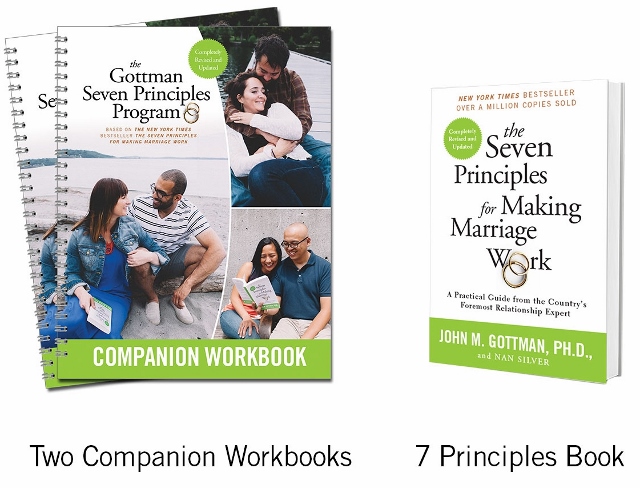
I encourage you to obtain Gottman’s book The Seven Principles for Making Marriage Work. I have enjoyed learning the different principles and then using them in my home. It has helped us to become closer together. Practicing the principles has helped us resolve our differences.
Gottman's video on knowing your spouse's dream --

No comments:
Post a Comment