LOVE MAPS
You ask – What is a love map?
It is when you are intimately familiar with your spouse’s world.
Love map is Gottman’s term for “that part of the brain where you store all of the relevant information about your partner’s life.”
You remember the major events in your spouse’s life and, as life goes on, you are updating the information as your spouse’s life changes.
How much do you know about your spouse? When he is sick, do you know what type of care he likes? Do you know his life dreams or his major aspirations and hopes in life? Do you know his thoughts, feelings, small things, and big things?
I became discouraged last week when I learned about the ‘Four Horseman.’ I could see that my husband and I could use ALOT of practice on our verbal and discussion skills. I became discouraged and wondered how our marriage had lasted over forty-one years. Then I read about ‘love maps’ this week in Gottman’s “Seven Principles for Making Marriage Work.” I realized that the success we have had in our marriage so far is because we know a lot about each other. My husband is not a gabber in public; he saves all of his talking for me. That has become a blessing in our marriage. Each night he comes home and reports on his day, his success, his failures, his frustrations, and his irritations. He will not talk politics in public, so we discuss it at home. Do you get the picture?
Gottman says that “if you don’t really know someone, how can you truly love them?”
How well do you know your spouse? Click on this link, and it will download a workbook. The very first page is the questionnaire. Or for fun go to the next page and play “The Love Map 20 Questions Game.” Want to know your spouse even more, than scroll a few more pages down and find the “Who Am I?” exercise and do it with your husband. Or download this file and do the exercise “Asking Open-Ended Questions.”
Try it on a date night or after the kids have gone to bed. Just have fun with them and start learning about your spouse.
NURTURE YOUR FONDNESS AND ADMIRATION
“Fondness and admiration are two of the most crucial elements in a rewarding and long-lasting romance.” Sometimes we can be distracted by our partner’s flaws, but if we still feel that the person we married is worthy of honor and respect, if we still cherish other, our marriage will stand firm.
Fondness and admiration are antidotes for contempt. We learned, last week, how contempt can destroy a marriage. If you can maintain a sense of respect for your spouse, then you are less likely to become disgusted with your spouse when you disagree.
So the Fondness and admiration have gone out of your marriage, but you are not ready to give up. Gottman has some exercises for you. You will find those activities in this workbook. There are four of them:
1. “The Fondness and Admiration questionnaire.”
2. “I Appreciate...”
3. “History and Philosophy of your Relationship.”
4. “The Seven-Week Course in Fondness and Admiration.”
We need to get into the habit of cherishing our partners. It is human nature to focus on their negative characteristics when we are angry or stressed. Instead, we need to focus on our partner’s positive characteristics. It helps make a crappy day become a better day.
In the end, we can do all of these exercises, but when the rubber meets the road, it comes down to OBEDIENCE & SACRIFICE and WILLING TO SUBMIT IN ALL THINGS.
When we submit it does not mean we roll over and do whatever our spouse says. It means we submit to the will of the Lord. We learn to live in the guidelines of the mind of Christ. When we have struggles and disappointments, we need to practice faith and believe that God is ministering to us. We need to allow him to step into our marriages and minister unto them. He can help us make those needed changes and sacrifices to make our marriage work.
Goddard gives a great allegory in his book “Drawing Heaven into Your Marriage.” It goes as follows:
“There is an allegory of a man who had two friends in the manufactured-home business. When he wanted a new house, he asked each friend to send him half a house. He gave no plans. He provided no specifications on size or style. He left them to design as they would. So each friend sent a lovely half-house. When the two halves arrived at the site, they were jarringly different. Rooms did not line up. Utilities did not match up. Roofs and walls between the two halves did not connect. This is a pretty good symbol for marriage” (Goddard 38).
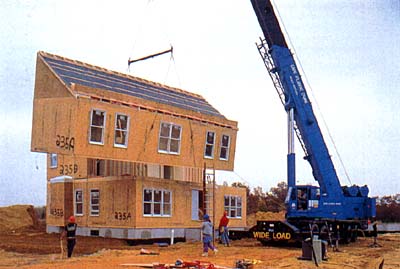
We are like each of those halves. We come into the marriage with our likes and dislikes, traditions, and habits. At first, we wonder if we will ever mesh together, but with time, love, fondness, admiration, respect, sacrifice, and Christ in our marriage, we can take that manufactured home and not only make it one but make it into a castle of our dreams.

No comments:
Post a Comment